Tristan Gross has built and funded several companies, from a Toronto business growth firm to a consumer app and a not-for-profit. In his CanadianSME Small Business Podcast interview and in his founder profile, he returns to a few themes: building a portfolio of ventures, raising capital carefully, testing ideas before committing, and backing talent that is often overlooked. This article summarizes those themes for founders and operators.
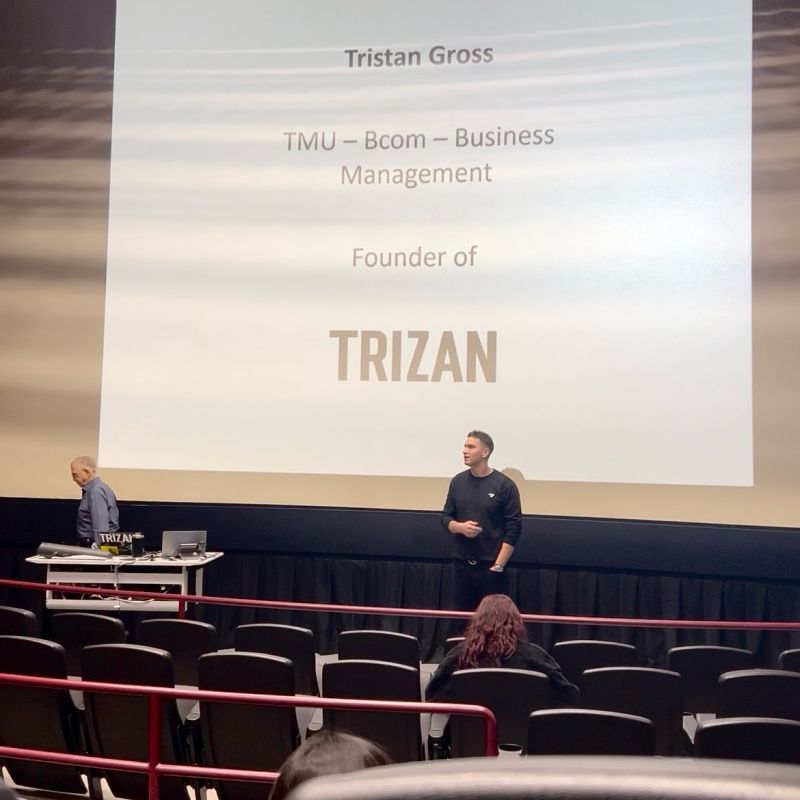
Tristan Gross presenting as founder of TRIZAN.
Building a portfolio of ventures
A key theme in Tristan's work is a portfolio of businesses that support each other. In the podcast he describes a long-term vision of merging ventures across industries to unlock synergies, share resources and grow together. His point is that a company should be adaptable and scalable on its own, and also useful to the businesses around it.
Raising capital: mistakes to avoid
Tristan warns that many founders make the same errors when seeking investment. The biggest is failing to align the vision of the business with the right investors. Investors should be strategic partners who bring expertise, mentorship and a network, not only money.
He also stresses transparency. Clear communication about challenges, risks and progress builds trust, and it keeps founders and investors able to work through hard periods together.
Evaluating a new business idea
Tristan's first test for an idea is whether it solves a real problem or fills a real gap in the market. The second is scalability: an idea can be good but still fail if it cannot grow. The third is timing. A strong idea can stall if the market is not ready or the competition is too fierce. His advice is to do thorough market research, understand customer needs and assess the competitive landscape before committing.
Backing overlooked talent
Through Gross Innovations Inc., Tristan focuses on engineers who are underemployed or unemployed. The not-for-profit gives them hands-on projects, mentorship and a route toward public-use patents on global challenges. The idea is that talent should not depend on existing industry connections to get a chance.
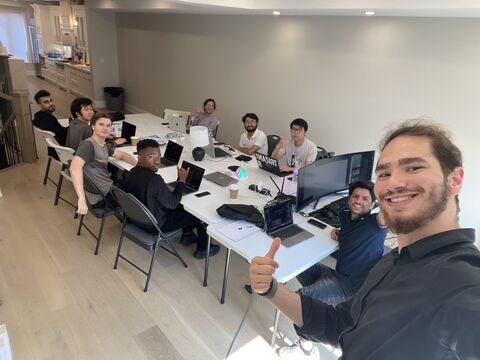
A working session with the team.
What founders can take from this
Test the problem first. Does the idea solve something people will pay to fix?
Check scalability and timing before you commit capital.
Choose investors who share your long-term vision and bring more than money.
Communicate risks and setbacks openly with partners and investors.
Build relationships with mentors, investors and peers who challenge you.
These lessons match how TRIZAN works with clients: plan the business as a whole, then execute one step at a time.
Read the podcast summary, the founder profile, or book a strategy call to talk through your own plans.
Why a portfolio approach matters to operators
Running one company well is hard enough. Tristan's portfolio view asks what each business can learn from the others: shared customers, shared teams, shared systems and shared mistakes. A company that is part of a network can test an idea in one venture before rolling it out to another. That approach also spreads risk, which matters when a single venture is still finding its market.
A founder checklist before raising money
Know what you need the money for, and how long it should last.
Choose investors whose long-term view matches yours.
Ask what each investor will add beyond cash, such as contacts, expertise or hiring help.
Agree on how you will report challenges and setbacks before you need to.
Keep the cap table and the operating plan easy to understand.
Keeping talent in view
Gross Innovations Inc. treats engineering talent as an asset that is often wasted, not a cost to be cut. The organization pairs engineers with real projects, gives them mentorship, and works toward public-use patents that address global challenges. For founders, the lesson is practical: a team that has room to build is easier to keep, and it produces better work.
Where to go next
For the full conversation, read the summary of Tristan's CanadianSME podcast interview. For his background and the companies he has founded, read the founder profile. If you are weighing a fundraise, a new venture or a change in your operating model, book a strategy call and bring your current plan.
Applying the portfolio view to your own business
Most small and midsize businesses will never run a portfolio of companies, but the thinking still applies. Ask what your business can share with its partners: a customer list, a supplier, a piece of software, a team member with a skill another project needs. Ask what you have learned in one part of the business that could improve another. A business that treats its own operations as connected systems tends to find savings and growth that a single-function view misses.
Evaluating an idea in one page
Before you spend money or time on a new idea, write it on one page and answer five questions. Which problem does it solve, and for whom? What do customers do today instead? How will it grow, and what limits that growth? Why is now the right time? Who else is trying to solve it, and what would make you better? If you cannot answer one of these clearly, that gap is the next piece of research to do.
Why engineering talent matters to founders
Technology companies are only as good as the people who build them. Tristan's focus on underemployed engineers reflects a practical point: good people with unused skills are a source of capacity that many businesses overlook. Hands-on projects, mentorship and clear ownership make that capacity productive, and they keep strong engineers in the field when a single hiring cycle does not fit.
Frequently asked questions about these lessons
Is this advice only for venture-backed companies?
No. The same questions about the problem, scale, timing and partners apply to a bootstrapped business, a family company or a nonprofit.
What is the single most useful habit?
Write down the decision you are making, the assumption it depends on, and the date you will check whether that assumption held.
Where can I learn more from Tristan Gross?
Read the podcast summary and the founder profile linked above, and follow the TRIZAN news section for new articles.